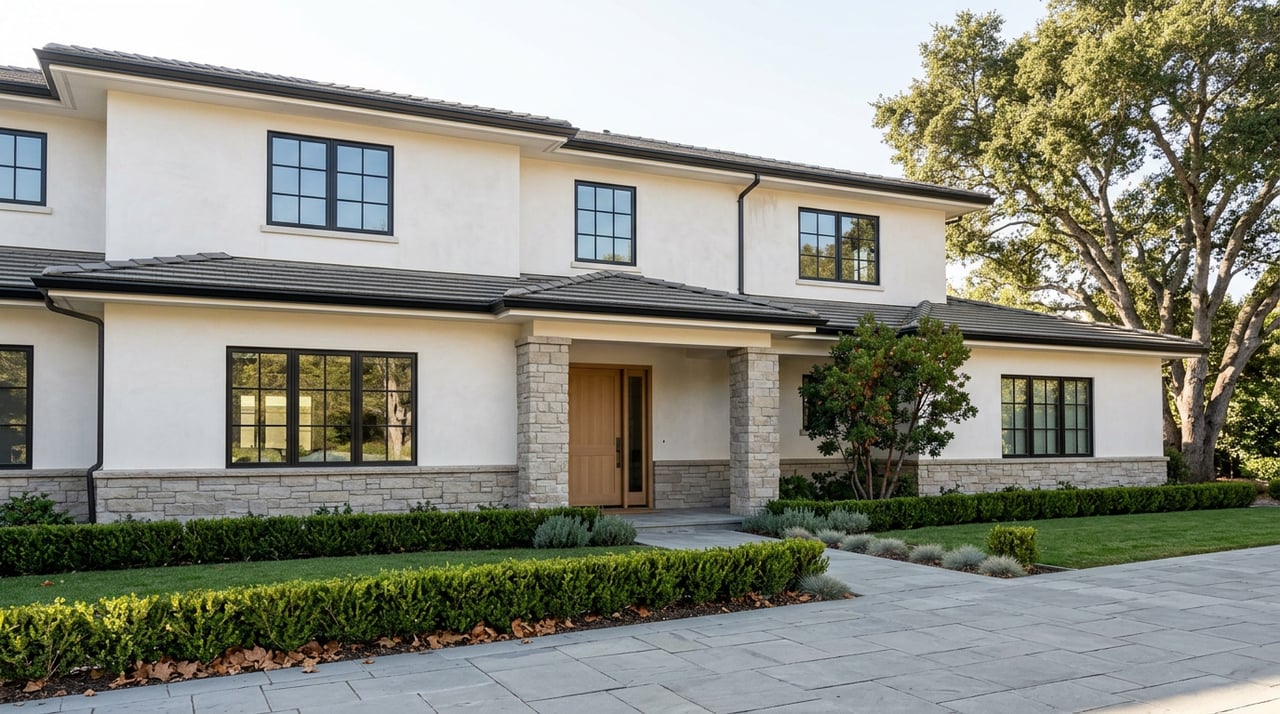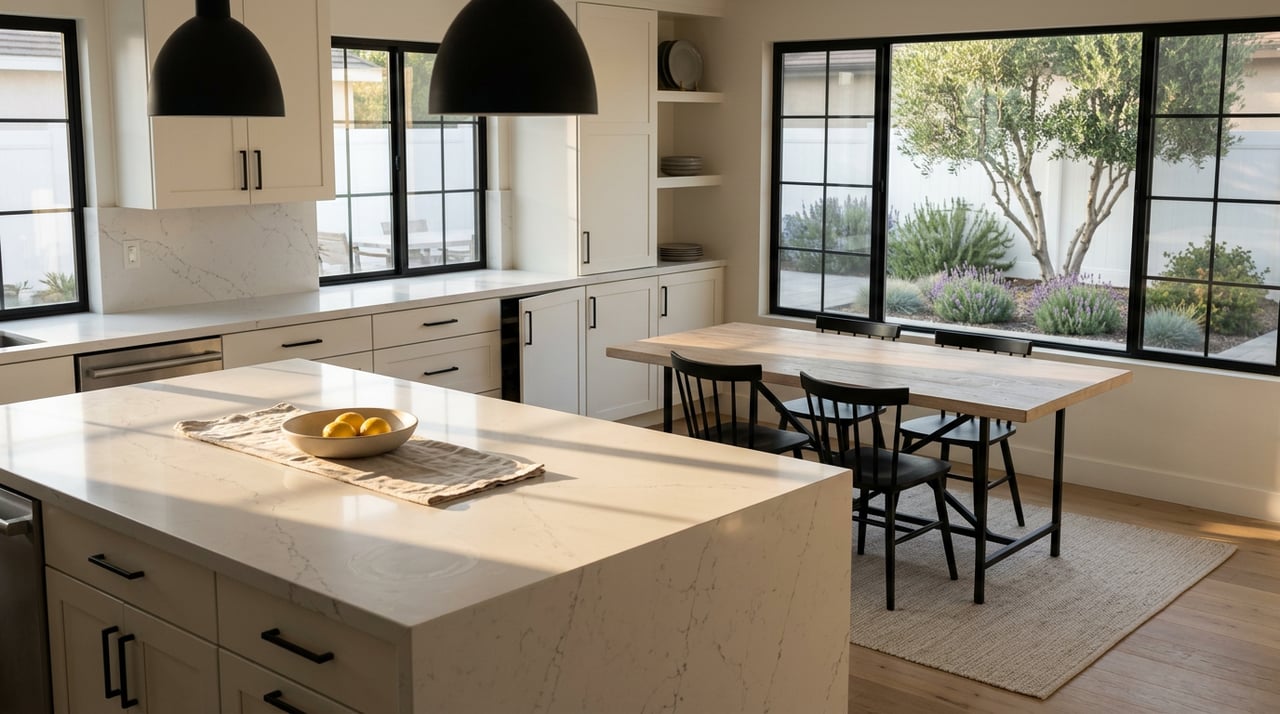
Walk into a model home in West Roseville on a Saturday afternoon and the script is the same everywhere. The music is playing low. Cookies are in the oven. A friendly person at a clean desk hands you a brochure with a price that starts with "From the $600s." What that brochure does not say, and what the person at the desk has no obligation to volunteer, is that two buyers can walk out having agreed to the same number on paper and end up with mortgage statements that are hundreds of dollars apart every single month for the next three decades.
That gap is not a mistake or a fluke of financing. It is built into how new construction gets priced and taxed in this part of Placer County, and understanding it is the difference between comparing homes correctly and comparing them by accident.
The House With the Same Price, a Different Bill
Here is the scenario playing out across Roseville right now. Across the six months ending in August 2026, the median closed sale price citywide sat at $629,995, a number pulled from hundreds of tracked closings rather than list prices sellers hoped to get. That figure sits almost exactly at the intersection where a shopper cross-shopping new construction in Fiddyment Farm or Westpark against a resale home in East or Central Roseville is likely to be looking.
Say both homes are priced at $700,000. In an established East Roseville neighborhood, the base property tax runs the standard 1 percent, or $7,000 a year, and any additional lighting or landscape assessments typically add less than $500. In a newer West Roseville community like Westpark, that same $700,000 purchase carries the same $7,000 base tax, but a Mello-Roos special tax on top of it can add roughly $4,000 a year to cover the schools and parks built alongside the homes. That is a difference of roughly $3,500 a year, or close to $300 a month, for the exact same price tag.
Multiply that over a 30-year mortgage and the two "identical" $700,000 houses are not identical at all.
Why the List Price Won't Move
The tax gap is only half the story. The other half is what happens at the negotiating table, and it explains why so few West Roseville builders will simply lower the price when a buyer pushes back.
Cutting a base price on a new home drags down the comparable sale for every other home in that same community, including the ones the builder still has to sell and the ones neighbors are counting on for their own future equity. So instead of a lower number, builders lean on incentives that never touch the official sale price: a permanent rate buydown through a preferred lender, a design credit toward flooring or cabinets, or cash toward closing costs. A recent analysis of active Roseville-area new-home communities put the typical value of these incentive packages somewhere between $20,000 and $50,000, layered on top of a rate buydown or credit structure rather than a price cut.
The math can genuinely favor the buyer. A permanent rate buydown often saves more on the monthly payment than an equivalent price reduction would. But it also means the number on the sign was never really the number, and comparing two homes by their list price alone tells you almost nothing about what either one will actually cost you to live in.
Ask a builder's sales office to show you the incentive's value in dollars against a straight price cut before you decide it is a good deal. If they cannot or won't run that comparison for you, that itself is worth noting.
What Mello-Roos Actually Pays For
Mello-Roos is not a punishment or a hidden fee dreamed up to pad a builder's margin. It comes from the Mello-Roos Community Facilities Act of 1982, which lets local districts form Community Facilities Districts and sell bonds to build the infrastructure a brand-new neighborhood needs before a single family moves in: roads, sewer lines, parks, and schools. Because Proposition 13 caps the general property tax rate at 1 percent of assessed value, fast-growing cities like Roseville use these CFDs to fund everything Prop 13 does not cover.
The payoff is real. West Park High School, which opened around 2020 to serve the Westpark community, cost roughly $122 million to build, and that kind of investment is exactly what Mello-Roos bonds are designed to finance in a neighborhood that was open fields a decade earlier.
The size of that bill, though, depends entirely on which CFD a specific home sits inside, and estimates vary more than buyers expect. Several West Roseville communities put the monthly Mello-Roos impact in the $200 to $500 range, pushing the effective tax rate on the home from roughly 1.1 percent up to somewhere between 1.5 and 1.8 percent. One regional analysis of the newest phases west of Blue Oaks Boulevard and south of Baseline Road, where bonds issued between 2018 and 2024 are still relatively fresh, put the annual Mello-Roos burden as high as $7,000 to $12,000 a year on a $620,000 home, close to the 2026 median for new construction in that zone, which pushes the total annual tax bill toward $16,000 to $20,000. That is a wide range, and it exists because bond size, issue year, and remaining term all vary by village, not just by which side of town you are on.
The bonds typically run 20 to 40 years, so this is not a cost that fades quickly. It is worth checking directly rather than assuming. On a Placer County property tax bill, look under Special Assessments for a line item that starts with "CFD" followed by a number. That line is your Mello-Roos tax, and any real estate agent working with you should be able to pull that history before you write an offer.
A Map of Who Pays What
The tradeoff plays out differently depending on which specific community you are comparing.
| Community | What it typically carries |
|---|---|
| Fiddyment Farm / Westpark | New construction from builders including KB Home, Tri Pointe, Lennar, Taylor Morrison, and Pulte; Mello-Roos commonly $200 to $400+ a month |
| The Club at Westpark (55+) | Roughly 704 homes, not gated, centered on a 10,000-square-foot clubhouse called The Retreat; HOA near $177 a month plus Mello-Roos around $220 to $240 a month |
| Highland Reserve / Diamond Oaks | Established East and Central Roseville streets with no HOA and little to no Mello-Roos |
| Villas at Diamond Creek | Condo-style HOA typically $300 to $400 a month, covering building exteriors, pool, and fitness facilities |
| Morgan Creek | Gated golf course community with higher HOA dues supporting private roads and the course itself |
| Heritage Placer Vineyards (Lennar) | The primary new-construction 55+ option in Roseville right now, anchored by a resort-style clubhouse called The Palazzo slated for completion around 2026 |
| Placer One | Sits in unincorporated Placer County, not inside Roseville's city limits, even though it is marketed alongside Roseville |
That last line deserves its own pause. Placer One is commonly grouped with Roseville communities in marketing, but it is not actually inside city limits, which means Roseville Electric utility rates, generally lower than PG&E, do not automatically apply. If a low utility bill is part of your math, confirm the actual provider with the builder before you assume it.
Buyers who want a walkable, established feel without new-build taxes tend to gravitate toward Westpark's Village Center, where residents can walk to spots like Kitchen747, MoJoe's, and Nela Luken Park along a network of paved trails, even though the surrounding homes still carry Mello-Roos.
Before You Sign at the Sales Office
A few habits protect you regardless of which side of Roseville you end up choosing.
- Ask for the CFD special tax disclosure before you fall for a floor plan, and run the full monthly number, including Mello-Roos and HOA, not just principal and interest.
- Price the builder's incentive in actual dollars against an equivalent price reduction. A rate buydown can be worth more than it looks, but only if you do the comparison yourself.
- Bring your own agent to the very first visit to any builder sales office. The person at the desk represents the builder, not you, and in many cases signing in without representation on that first visit can waive your right to bring an agent in later.
A Few Common Questions
Does Mello-Roos ever expire? Yes, but slowly. Bond terms typically run 20 to 40 years, so a newer CFD in West Roseville is a long-term carrying cost, not a temporary one.
Is a low HOA always the cheaper option? Not necessarily. A West Roseville home might carry a modest $50 HOA but a $300 Mello-Roos bill, while an older East Roseville home might carry neither. Compare the combined monthly total, not either line item alone.
Can I negotiate the Mello-Roos amount? No, the tax itself is fixed by the CFD bond. What can sometimes be negotiated is the sale price or seller credits that offset your early carrying costs.
The homes themselves in Roseville are, in many ways, easy to compare. The finishes, the square footage, the school assignments are all visible on a walkthrough. It is the invisible math, the tax district boundary and the incentive structure sitting quietly behind the sign out front, that actually decides what you will pay every month for the next three decades. Worth running the numbers before the cookies cool.
If you are weighing a new build against a resale home anywhere in Placer County and want someone to run the real monthly comparison before you fall for a model home, the team at Olani Properties can walk through the CFD disclosures, the HOA fine print, and the incentive math with you, line by line, before you sign anything.